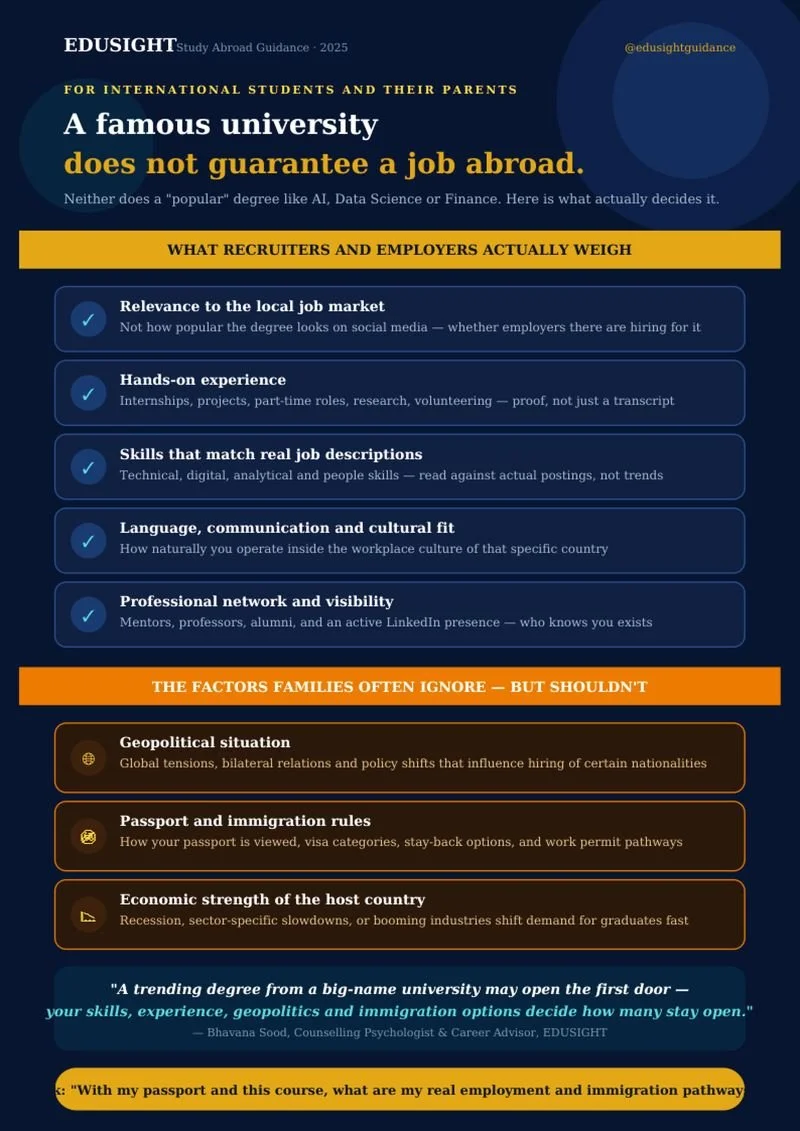
A famous university does not guarantee a job abroad.
International students: Your future abroad is about more than a “big-name” university or a “popular” degree
As a counseling psychologist and career counselor, one pattern emerges:
Many international students (and parents) still believe that a prestigious university and a currently “popular” degree (like AI, Data Science, Finance, etc.) automatically guarantee a job abroad.
They don’t.
Recruiters and employers look at a combination of factors, not just the university name or the label on your degree. These include:
Relevant work experience – internships, part-time jobs, research assistance, volunteering
Skills, not titles – technical, analytical, digital, and people skills that directly match the role
Language and communication – clarity, confidence, and cultural sensitivity in real interactions
Networking and relationships – professors, mentors, alumni, professional events, LinkedIn presence
Adaptability to local work culture – understanding how people work, communicate, and make decisions in that country
And equally important, but often ignored by families:
Geopolitical situation – global tensions, bilateral relations, and policy changes that influence hiring of certain nationalities
Passport and immigration rules – how your passport is viewed, visa categories, stay-back options, and work permit pathways
Economic strength and stability of the host country – recession, sector-specific slowdowns, or booming industries that change demand for graduates
A “trending” degree from a big-name university may open the first door, but your skills, experiences, geopolitical reality, and immigration options decide how many doors actually stay open.
For students planning to study abroad, career planning should begin before you apply, not in the final semester. Look beyond rankings and glossy brochures.
Ask: “In this country, with my passport and this course, what are my realistic employment and immigration pathways after graduation?”
That question is often more powerful than,
“Which is the most famous university or the hottest degree I can get into?”